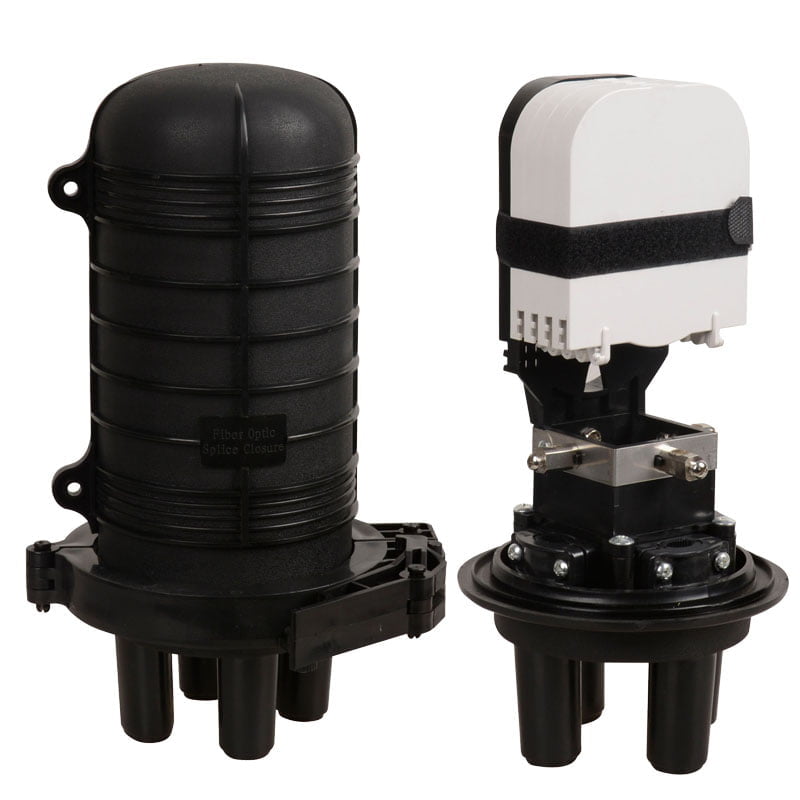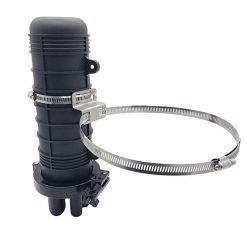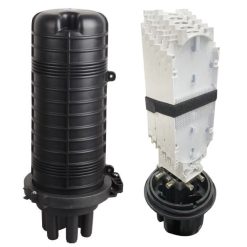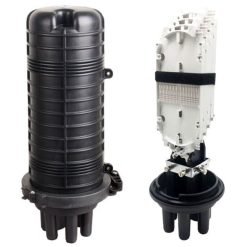
Dome Type Optical Fiber Splice Closures

Overview: Dome type optical fiber splice closures, also known as vertical closures, are essential components for protecting and managing fiber optic splices in outside plant (OSP) environments. Their dome-shaped design provides a compact and highly durable housing for safely storing splice trays and uncut loose tube cables. Engineered for versatility, these closures are sealed to prevent the ingress of dust and moisture, ensuring the long-term reliability of fiber optic networks. As a direct factory, we specialize in manufacturing robust, high-capacity dome closures for B2B clients, including telecom operators and network contractors.

Benefits & Applications

The primary benefit of a dome splice closure is its robust environmental protection and versatile application range. They are ideal for aerial, pole-mounted, wall-mounted, duct, and direct-buried underground installations. Their design facilitates easy re-entry for maintenance or network expansion. Dome closures are widely deployed in FTTx networks, long-haul communication systems, CATV networks, and LAN/WAN backbones to protect critical connection points from harsh external conditions, ensuring network integrity and performance.

Key Technical Benefits

- IP68 Rated Protection: Offers the highest level of protection against water submersion and dust ingress, making it suitable for the harshest environments.
- Versatile Installation: Can be deployed in a variety of OSP applications, including aerial, underground, manhole, and pole mounting.
- High-Impact Resistance: Constructed from high-strength engineering plastic (PP, PC+ABS) that is UV stabilized and chemically resistant.
- Flexible Cable Port Configuration: Features multiple round ports for branch cables and a large oval port for uncut mainline cable pass-through.
- Advanced Sealing Technology: Utilizes a reliable mechanical sealing system with gaskets or heat-shrinkable seals to ensure a watertight enclosure.
- High-Capacity Fiber Management: Accommodates a large number of splice trays, capable of managing hundreds of fiber splices in a single closure.

Technical Specifications

Parameter Value
Ingress Protection Rating IP68 (Waterproof and Dustproof)
Material High-Strength Modified Polypropylene (PP)
Sealing Method Mechanical Seal (Gasket) / Heat Shrink
Max. Fiber Capacity 12 - 576 Fibers (model dependent)
Cable Ports 1 Oval Port, 4 to 10+ Round Ports
Application Aerial, Pole-Mount, Wall-Mount, Underground, Duct
Impact Resistance IK10
Operating Temperature -40°C to +65°C

As a leading supplier and manufacturer, we provide a comprehensive range of dome fiber optic splice closures at competitive wholesale prices. We support our B2B partners with OEM branding, custom configurations, and bulk order discounts, delivering factory-tested solutions for large-scale telecommunication projects.

FAQ

1. What is a dome fiber optic splice closure?

A dome fiber optic splice closure is a weather-proof enclosure used to protect fiber optic splices in outside plant applications. Its vertical, dome-like shape is designed for various installations, including aerial, underground, and pole-mounted.

2. What is the difference between a dome and an inline splice closure?

A dome closure is typically vertical and is highly versatile for branching applications where multiple cables come together. An inline (horizontal) closure is used for straight, pass-through applications where two cables are joined, often in underground duct systems.

3. What does an IP68 rating mean for a dome closure?

An IP68 rating signifies that the dome closure is completely protected against dust ingress and can withstand long periods of immersion in water under pressure. This ensures the fiber splices inside remain safe and dry even in flooded manholes or direct-buried applications.

4. How many fibers can a dome splice closure hold?

The capacity of a dome splice closure varies widely by model. Small closures may hold 12 or 24 fibers, while large-capacity models can accommodate 288, 576, or even more fibers, making them suitable for high-density network hubs.

5. Where are vertical dome type closures typically installed?

Vertical dome type closures are highly versatile and can be installed almost anywhere in the outside plant network, including attached to aerial messenger wires, mounted on utility poles or walls, and placed in manholes or handholes.

6. What is the difference between mechanical and heat-shrink sealing?

Mechanical sealing uses compressed rubber gaskets and clamps to seal cable ports, which allows for easier re-entry without special tools. Heat-shrink sealing uses sleeves that are heated to shrink tightly around the cable, providing a permanent, robust seal.

7. Can I purchase these fiber optic domes wholesale from your factory?

Yes, absolutely. As a direct manufacturer, we offer competitive wholesale pricing for our entire range of fiber optic dome closures. We specialize in supplying bulk quantities for large projects and telecom operators.

8. Are your splice closures suitable for FTTx applications?

Yes, our dome splice closures are ideal for FTTx applications. They serve as excellent distribution points in the network, protecting splices for PON splitters and connecting feeder cables to distribution and drop cables.

9. What material are your dome splice closures made from?

Our dome splice closures are manufactured from high-quality, high-strength engineering plastics like modified Polypropylene (PP), which offers excellent resistance to UV radiation, chemical corrosion, and mechanical impact.

10. Is it easy to re-enter a sealed dome closure for maintenance?

Yes, dome closures, especially those with mechanical seals, are designed for easy re-entry. Technicians can open, access the splices for maintenance or additions, and re-seal the closure without requiring a new sealing kit.

11. Do you provide all the necessary accessories with the dome closure?

Yes, each dome splice closure kit comes complete with all the necessary accessories for installation, including splice trays, fiber protection sleeves, sealing components, mounting hardware, and cable management ties.

12. Can a dome closure be used for both single fiber and ribbon fiber?

Yes, our dome closures can be equipped with versatile splice trays that are designed to accommodate both single fiber fusion splices and mass fusion splices for ribbon fiber, providing flexibility in network design.

13. How do I get a B2B quote for a large order of dome splice closures?

To receive a B2B quote for a large order, please contact our sales team directly via our website's contact form. Provide your required quantity, specific model, and any custom requirements, and we will provide a factory-direct quotation.

14. Are these closures resistant to UV radiation for aerial installations?

Yes, the housing of our dome splice closures is made from UV-stabilized material. This ensures that the enclosure will not degrade, crack, or become brittle when exposed to direct sunlight over long periods in aerial installations.

15. What is the function of the oval port on a dome splice closure?

The large oval port is designed for uncut cable pass-through. It allows a technician to install the closure on a mainline cable without cutting all the fibers, accessing only the specific fibers needed for splicing while the others continue through the closure untouched.