
What Is Fiber Optic OTDRs?

Fiber Optic OTDRs An Optical Time Domain Reflectometer is an important instrument used by organizations to certify the performance of new fiber optics links and detect problems with existing fiber links.
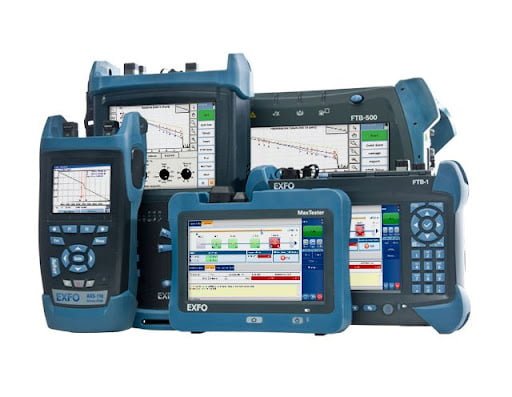
Fiber Optic OTDRs

Fiber Optic OTDRs

The OTDR sends a pulse of laser light into one side of the optical fiber. As the pulse travels along the fiber, a small portion of the pulse’s energy is reflected to the detector from points along the fiber, such as connectors, multiplexers, splices, splitters and other components on the optical link.

The health of your network depends on the quality of your network infrastructure. This quality begins with complete certificationby contractors or systems integrators that the fiber cabling infrastructure was properly installed. Maintaining a reliable fiber plant is also essential in protecting your business-critical applications. As a network administrator, it is important to understand how to get the best performance from your cabling investment and how to solve problems quickly when they occur.

It’s useful for testing the integrity of fiber optic cables. It can verify splice loss, measure length and find faults. The OTDR is also commonly used to create a “picture” of fiber optic cable when it is newly installed

Overview: OTDR, or Optical Time Domain Reflectometer, is an essential instrument for testing and troubleshooting fiber optic networks. It sends laser pulses through the fiber and measures backscattered and reflected signals, allowing precise detection of faults, splices, and connector losses across long cable spans.

Main Features

  • Measurement Range: Up to 240 km dynamic range depending on model
  • Wavelengths: 1310 nm, 1550 nm (optional 1625 nm or 1650 nm)
  • Pulse Width: 3 ns to 20 µs adjustable for short or long distance fibers
  • Display: 7‑inch TFT touch screen with auto‑test and trace analysis
  • Memory & Ports: USB, SD card storage, Wi‑Fi (optional)
  • Battery Life: Up to 10 hours continuous operation
  • Compliance: IEC 61315 and CE approved

Applications

  • FTTH ( Fiber to the Home ) installation verification
  • Long‑haul and Metro backbone fiber maintenance
  • Splice loss and connector reflection testing on both SM and MM fibers
  • Data center and enterprise network troubleshooting
  • Construction and acceptance testing for new fiber links

Advantages

  • High dynamic range for testing long distances up to 240 km
  • Fast Auto‑Test Mode for field technicians
  • Rugged handheld design with long battery runtime
  • Optional PC software for trace report and PDF data export
  • Best Price and global availability for fiber testing projects

Related keywords: OTDR tester datasheet, handheld OTDR specification, buy OTDR for fiber optic testing online, FTTH OTDR measurement equipment.

FAQ – OTDR (Optical Time Domain Reflectometer)

What is an OTDR used for?

An OTDR measures fiber length, splice loss, reflection points, and overall link quality by analyzing backscattered light pulses.

Can OTDRs test both singlemode and multimode fibers?

Yes. Most OTDRs support singlemode (1310/1550 nm) and multimode (850/1300 nm) modules for versatile applications.

What is the typical dynamic range of an OTDR?

Dynamic ranges vary from 26 dB to 45 dB, allowing measurement of link lengths up to 240 km depending on pulse width and fiber type.

How do I interpret an OTDR trace?

The trace graph shows fiber loss events, splices, and reflections. Each spike represents a reflection point such as a connector or break.

Why choose an OTDR from mefiberoptic.com?

We provide accurate, field‑ready OTDR equipment offering Best Price performance, software support, and global accessories supply.