
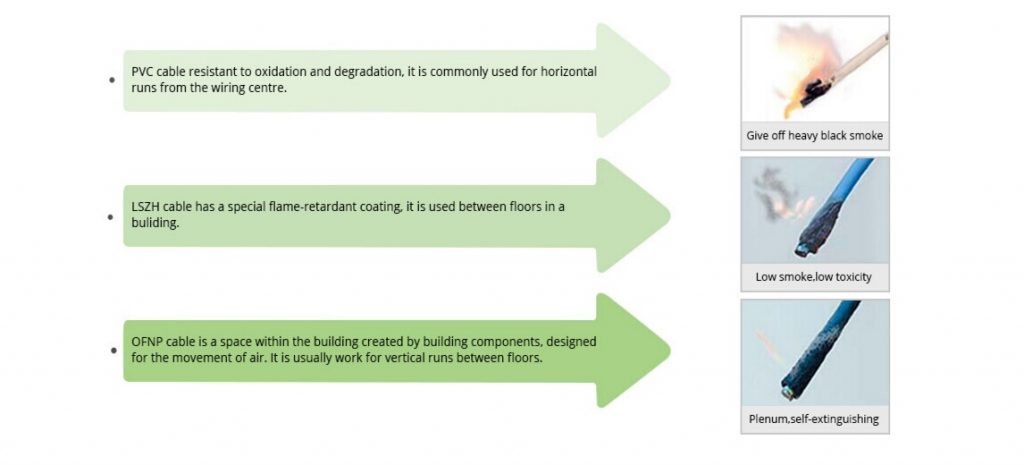
Physically, PVC and LSZH are very different. PVC are very soft; LSZH are more rigid because they contain the flame retardant compound, and they are aesthetically more pleasing. A PVC cable (made of polyvinyl chloride) has a jacket that gives off heavy black smoke, hydrochloric acid, and other toxic gases when it burns. Low Smoke Zero Halogen (LSZH) cable has a flame-resistant jacket that doesn’t emit toxic fumes even if it burns.
As we know fiber optic cable is constructed from the inside core, cladding, coating, strengthen member to the outside cable jacket. The bare fiber is easily broken,so fiber optic cable sheath is needed to provide protection for the shielding and conductors within the cable. The cable jacket is the first line of moisture, mechanical, flame and chemical defense for a fiber cable.
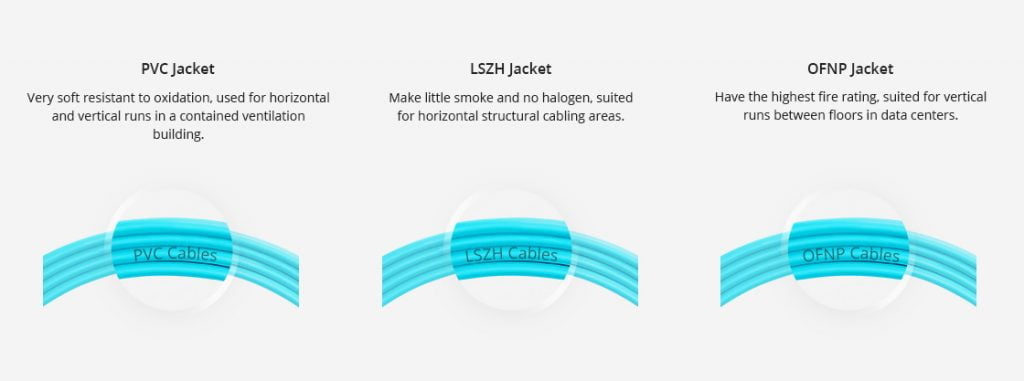
PVC means Polyvinyl Chloride. PVC cable is very soft resistant to oxidation and degradation, is used for horizontal runs between the table.It is also work for vertical runs if the building features a contained ventilation system running through the duct work.
LSZH means Low Smoke Zero Halogen. It’s more rigid as it owns a special flame-retardant coating, and excellent fire safety characteristics of low smoke, low toxicity and low corrosion. LSZH cable is typically used in poorly ventilated areas such as aircraft or rail cars. Low smoke zero halogen is becoming very popular and, in some cases, a requirement where the protection of people and equipment from toxic and corrosive gas is critical.
OFNR means Optical Fiber Nonconductive Riser. OFNR fiber cables are used in Riser areas which are building vertical shafts or runs from one floor to another floor. OFNR fiber cables cannot be installed in the ventilation area because they do not have the fire and smoke ratings required by Plenum rated cables.
OFNP means for Optical Fiber Nonconductive Plenum. OFNP fiber cables are fire and smoke resistant. They can be installed in pipes, plenums and other spaces for building gas streams. This is the highest level of fire rated cable, no other cable can be used as a substitute. OFNP plenum cables can be used as an alternative to OFNR fiber cables.
PUR means Polyurethane. It’s very flexible and scratch resistant that is mainly used in low-temperature environments.
PE means Polyethylene. Ihas excellent properties of moisture and weather resistance, and has the good electrical properties over a wide temperature range. It’s also abrasion resistant. So PE is the standard jacket material for outdoor fiber optic cables.
pvc vs lszh pvc vs lszh vs ofnp pvc vs lszh fiber pvc vs lszh cables pvc or lszh fiber pvc vs lszh vs ofnp


What’s the difference between PVC and LSZH cables
I NO ENGLISCH